8 tips - How to catch more fish
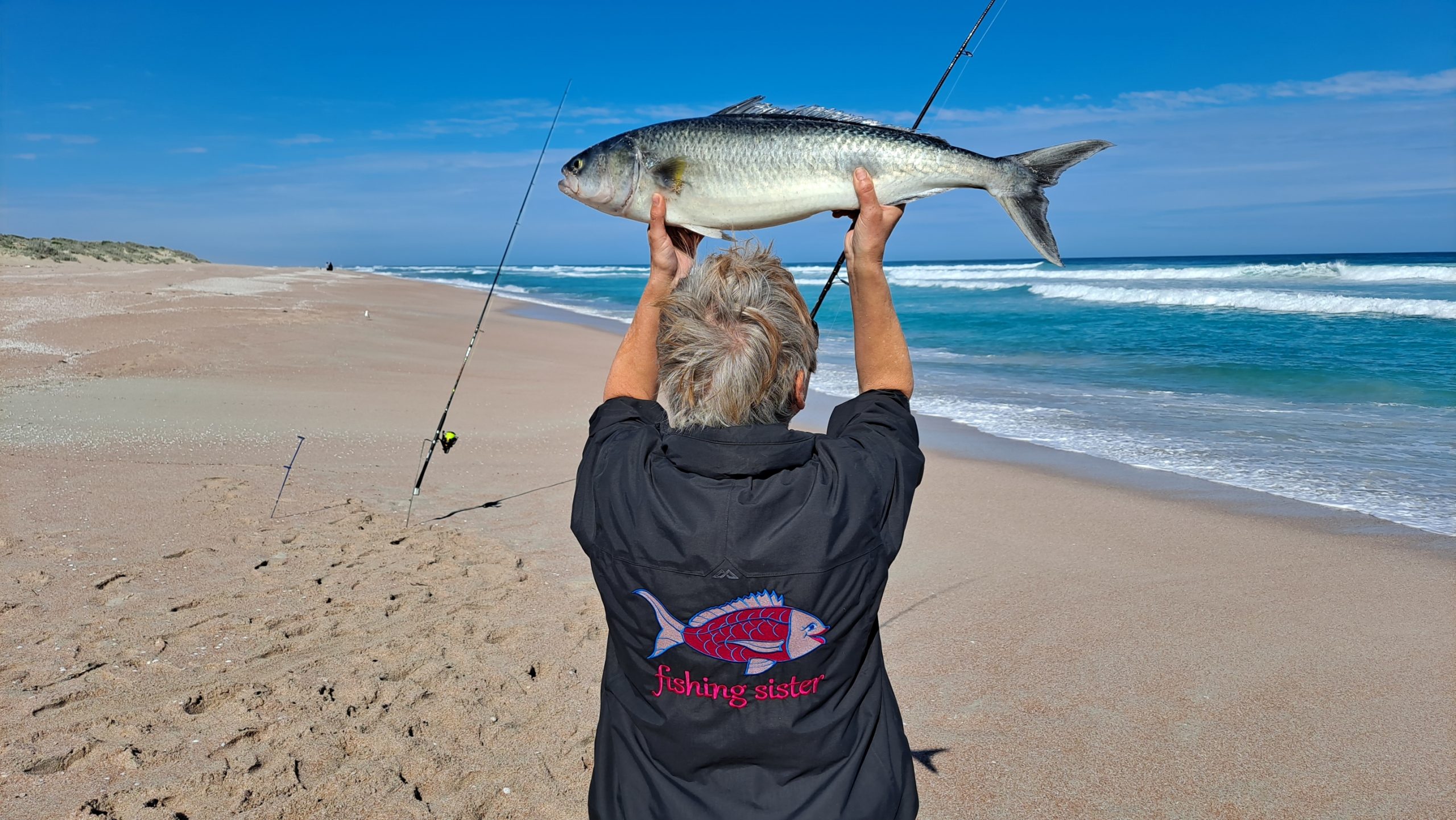
People often tell us they love fishing but hardly ever catch anything. They want to know how they can catch more fish, so they can bring home dinner. Although we do catch fish a lot of the time, is not by accident! Sometimes luck is on our side, however we believe the planning we do is what makes the difference.
Consistently catching fish starts long before you arrive at the water. The most successful anglers spend time planning their trip, understanding the conditions, and selecting the right location, equipment, and fishing strategy. Rather than simply turning up and hoping for the best, a little preparation can dramatically improve your results.
By following these eight practical land-based fishing tips, you can increase your chances of success, avoid common frustrations, and make every fishing trip more enjoyable and productive.
TIP 1. Check the wind direction
Wind direction is one of the most important factors to consider when planning a fishing trip. Strong winds blowing directly into your face can make casting difficult, reduce casting distance, affect bait presentation, and make fishing uncomfortable. Certain techniques, such as float fishing, can become almost impossible when the wind is pushing your line back towards shore.
Whenever possible, choose a location where the wind is behind you or blowing across your fishing position. This improves casting efficiency, helps keep your line under control, and allows you to focus on fishing rather than battling the elements. Choosing a location with favourable wind conditions can often be the difference between an enjoyable session and a frustrating one.
App: Windy
- Check wind direction and wind speed before leaving home.
- Compare conditions across multiple fishing locations.
- Identify protected areas and beaches that will fish best in the current conditions.
Click the icon below Windy Mobile Application

TIP 2. Choose a Location That Suits the Conditions
Once you’ve checked the wind direction, the next step is to choose a fishing location that takes advantage of those conditions. Different locations perform better under different wind and weather patterns, whether you’re fishing a beach, jetty, rock platform, reservoir, lake, or estuary.
The Fishing Sister team regularly uses Google Maps satellite view to investigate potential fishing locations before heading out. Satellite imagery can help reveal:
- Beach gutters and channels
- Rocky points and headlands
- Sheltered bays
- Reedy areas and weed beds
- Access tracks and parking areas
- Alternative locations nearby
Satellite imagery is an excellent planning tool, but conditions can change significantly due to tides, storms, swell, and sand movement. What you see on Google Maps should be used as a guide rather than a guarantee. Always reassess the location when you arrive and have a backup plan if conditions aren’t suitable. Tool: Google Maps (Satellite View)
Click the icon below for Goole Maps

TIP 3. Check the Tides and Times
Knowing when to fish is just as important as knowing where to fish. Fish generally feed more actively during certain tide phases and environmental conditions. Planning your trip around these periods can significantly improve your chances of success.
Fishing Sister currently uses the Fishing Times app that can help you identify:
- High and low tide times (Shown as light and dark blue)
- Major feeding periods (Shown as light green )
- Minor feeding periods (Shown as dark green)
- Sunrise and sunset (Shown as a sun on the dial)
- Moon phases (Shown as a moon on the dial)
Fishing Sister often plans sessions around the rising tide and prefers fishing during the couple of hours leading into high tide. Sunrise and sunset are also well known for producing increased fish activity, particularly for species that feed more aggressively in low-light conditions.
While feeding forecasts should never be treated as an absolute prediction, they provide useful guidance for deciding the best time to have your lines in the water. App: Fishing times
Click the icon above for the Fishing Times mobile application
TIP 4. Decide What Species You Want to Target
One of the biggest mistakes new anglers make is trying to catch “anything.” A much more effective approach is to decide which species you want to target before leaving home. Once you know what you’re targeting, you can select the most suitable location, bait, tackle, and fishing techniques.
Research local fishing conditions by:
- Reading recent fishing reports
- Joining local Facebook fishing groups
- Speaking with tackle shop staff
- Watching local fishing videos
- Checking reports from other anglers
Understanding what species are currently active in an area helps you focus your efforts and increases your likelihood of success.
Once you have identified your target species it is important to know their relevant rules and regulations. Fishing Sister recommends the SA Fishing App as an excellent resource for anglers. The app includes:
- Fish identification guides
- Legal size limits
- Bag limits
- Fishing regulations
- Species information
Because mobile reception may be limited in some remote locations, many anglers also carry a printed species guide or fisheries information sheet as a backup. Recommended App: SA Fishing App
Click the icon below for the Fishing SA mobile application
TIP 5. Take the Right Rigs and Bait
Choosing the correct rigs, hooks, sinkers, and bait for your target species is critical. Different fish have different feeding habits, preferred prey, and mouth sizes, which means one setup rarely suits every situation.
Preparation is the key to success. Before your trip:
- Research the best rig for your target species.
- Pack multiple pre-made rigs.
- Bring spare sinkers, hooks, swivels, and leader material.
- Carry more than one bait option.
- Prepare for the possibility of losing tackle to snags or rough conditions.
Fishing Sister recommends carrying a selection of proven baits such as:
- Salted pilchards
- Cockles
- Squid
- Gents (maggots)
These baits are effective for a wide variety of species and provide flexibility if fishing conditions change. It is also worthwhile carrying a few metal lures, particularly silver lures that can be quickly cast at passing schools of salmon if the opportunity arises.
Being prepared with the right tackle and multiple bait options allows you to adapt to changing conditions and fish behaviour throughout the day.
TIP 6. Use Burley to Attract Fish
Burley is often described as a fishing “secret weapon” because it actively attracts fish into your fishing area. A steady scent trail encourages fish to investigate and can keep them feeding nearby for extended periods.
Depending on the situation, burley can be delivered using:
- Burley bags
- Mesh sacks
- Burley buckets
- Feeder floats
- Burley springs
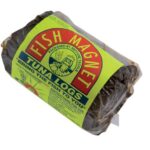
- Burley logs
- Burley pellets
Popular burley ingredients include:
- Fish frames
- Fish scraps
- Old bait
- Pilchards
- Breadcrumbs
- Tuna oil
- Spices
Fishing Sister uses burley regularly when targeting species such as salmon, mullet, garfish, and tommies. Whether you’re fishing from the beach, rocks, or a jetty, a well-maintained burley trail can dramatically improve your chances of bringing fish within casting range.
For many experienced anglers, burley is not optional—it is an essential part of the fishing plan.
TIP 7. Look for the best spot to fish
Even at a productive fishing location, fish are not evenly distributed throughout the water. Taking a few minutes to observe the area before casting can greatly improve your results.
Look for fish-holding features such as:
On Beaches
- Gutters
- Deeper channels
- Holes and troughs
- Areas where waves break differently
- Sections with minimal seaweed
For Whiting
- Clear sandy patches located near weed beds
- Broken-bottom areas that provide nearby cover
For Garfish
- Reedy areas suitable for float fishing
For Squid
- Weed beds
- Jetty pylons and structure
- Areas illuminated by lights at night
- Locations showing evidence of squid activity, such as ink stains
Many anglers mistakenly try to cast as far as possible. In reality, fish are often much closer to shore than expected, particularly when using gutters and other natural structures as feeding zones. Understanding where fish are likely to be holding allows you to fish more effectively and waste less time.
TIP 8. Your Comfort (be prepared)
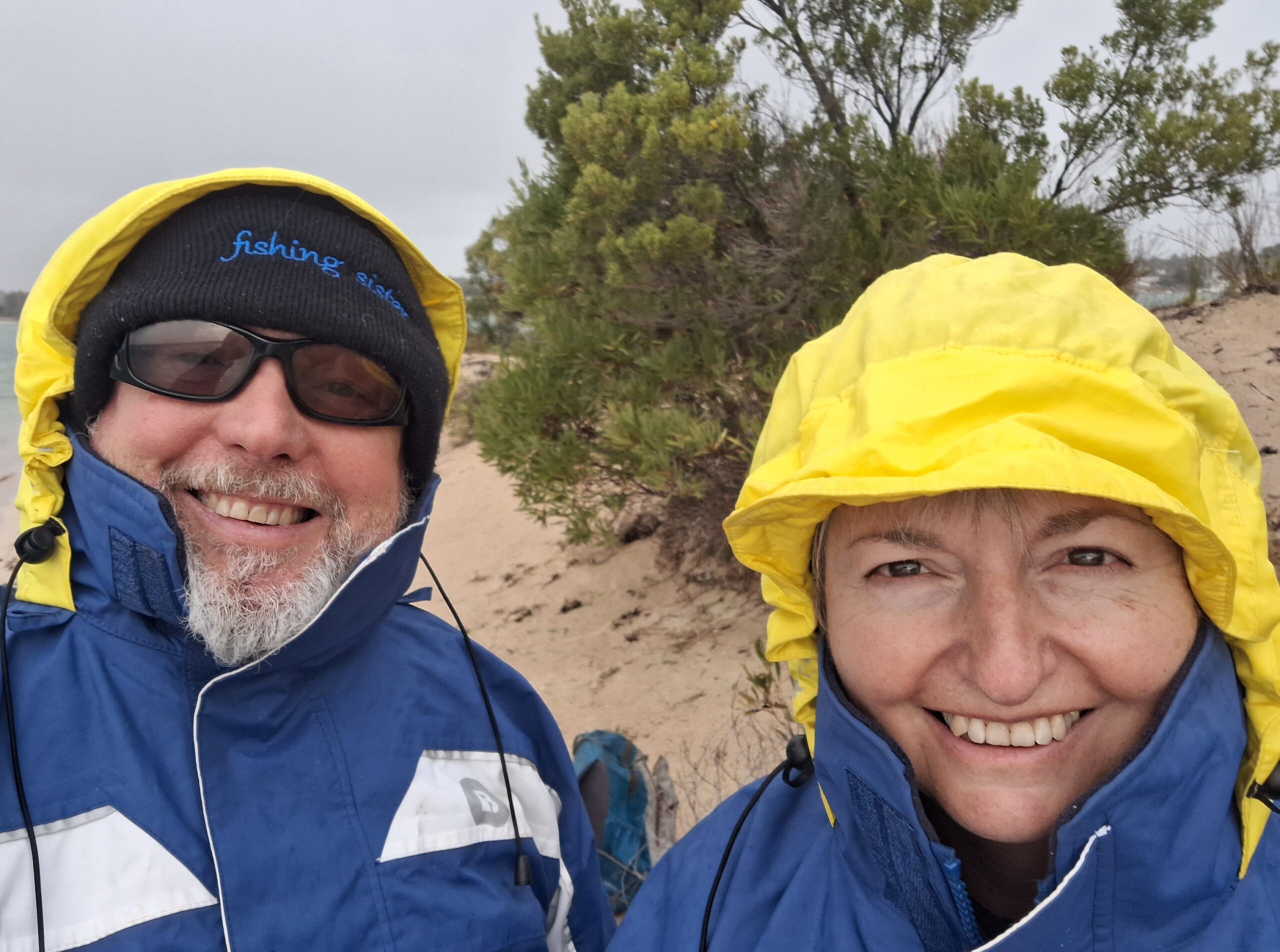
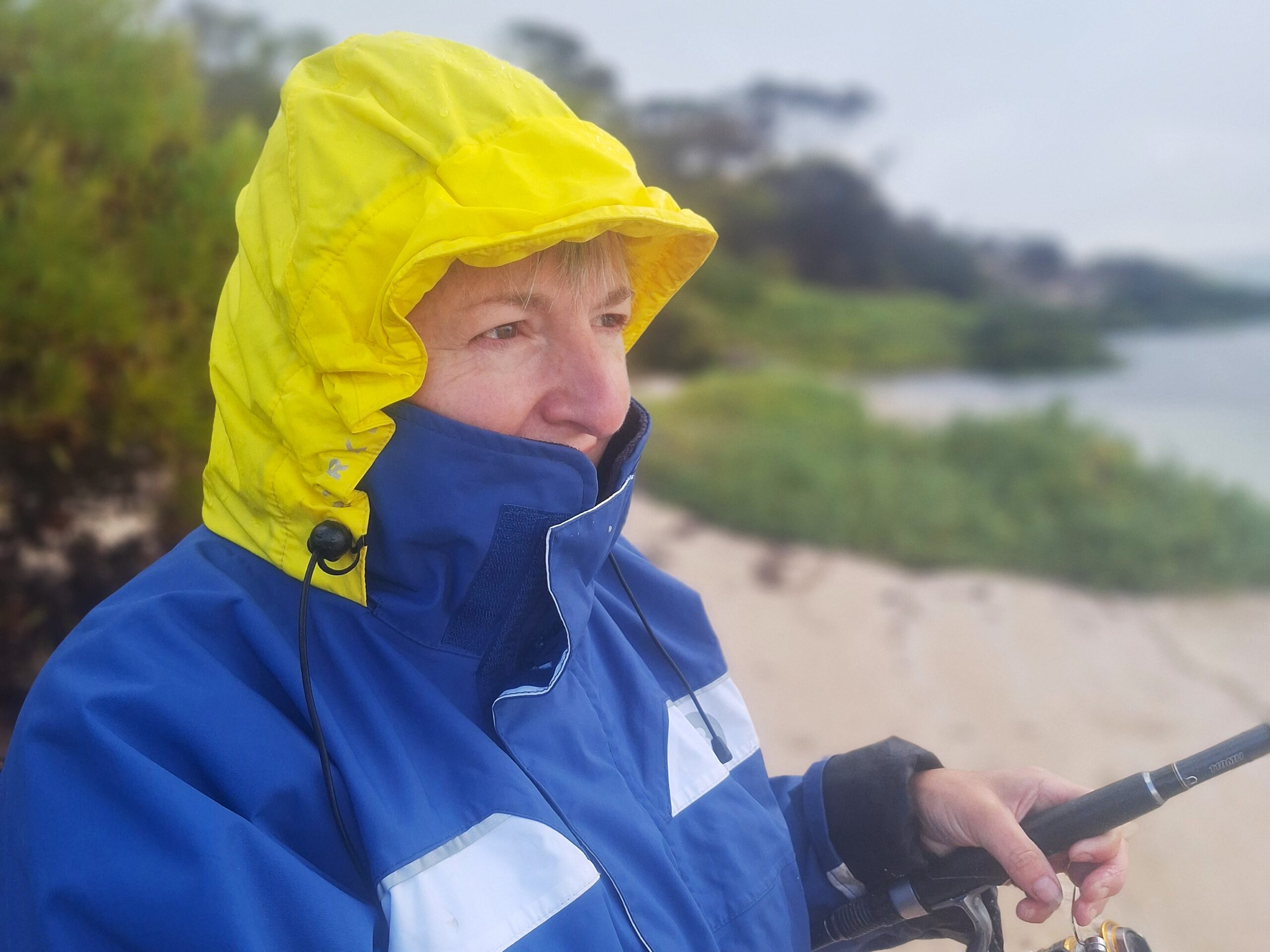
Fishing should be enjoyable. Even the best fishing location can become unpleasant if you’re cold, hungry, wet, or unprepared. Proper preparation allows you to stay focused and fish effectively for longer periods.
Essential items may include:
- Weather-appropriate clothing
- Waterproof outer layers
Suitable footwear - Sunscreen & Hat or wet weather gear
- Food and water
- Lightweight seating
Comfort contributes significantly to overall enjoyment and can make the difference between ending a session early or staying long enough to catch fish during a productive feeding period.
Bringing it altogether
Successful fishing rarely happens by accident. The most consistent anglers follow a process:
- They check wind direction using Windy App
- Research suitable locations with Google Maps
- Plan around tides and feeding periods using Fishing Times App
- Identify likely target species through local reports and the SA Fishing App
- Pack the right rigs and bait
- Use burley to attract fish
- Carefully assess where fish are likely to be holding
- Ensure they remain comfortable throughout the day.
By following these eight simple but highly effective planning steps before every trip, you’ll not only improve your catch rate but also enjoy a more relaxed, organised, and rewarding fishing experience.
So follow these eight tips before you head off for your next land-based fishing session. These tips will increase your chances of fishing success and also make the day more enjoyable. Happy fishing!